
Industrial Hydrant Piping Installation
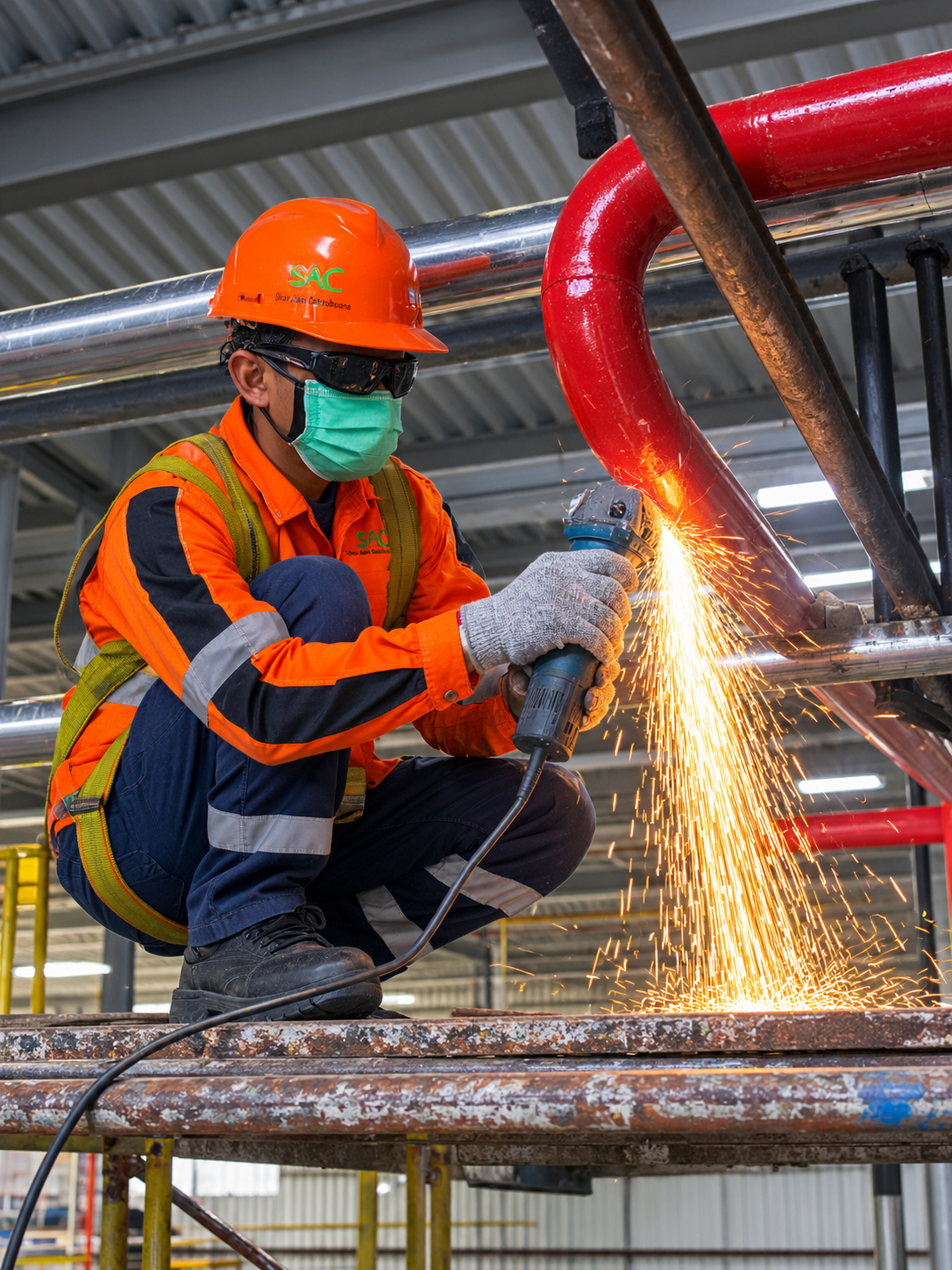
Project Description
Industrial hydrant piping installation establishes pipework for a facility fire-water distribution network. Routing, connections, valves and supports follow system design so the network can be inspected and maintained.
Scope of Work
- Prepare hydrant piping routes and connection points
- Install pipes, fittings, supports, flanges and valves to approved drawings
- Coordinate pipe routes with structural and utility systems
- Inspect joints and prepare the specified system testing
Hydrant Network Engineering Considerations
Industrial hydrant piping installation requires routing that accounts for service points, building constraints and maintenance access. Valves and connections should remain accessible for inspection as required by the design. Pipe materials and joining methods follow the relevant fire-water network specification.
Coordination with structural elements, other utility lines and production areas helps avoid interference with facility access. Following installation, joints, supports and network identification are reviewed before the specified tests. Technical verification takes account of system requirements, including leakage and pressure-test procedures set out in the project documents.
Work Outcomes
The installation output consists of configured hydrant pipe routes connecting the network points shown in the fire protection design. Installation inspection and specified tests are needed to assess function, leakage and pressure requirements.
Technical References
For broader technical guidance, see NFPA. Explore SAC’s capabilities through the services division.
What This Means for Clients: Convenience, Responsiveness and Peace of Mind
Hydrant piping installation must consider network routing, building access, clashes with other services, and system inspection needs. SAC supports convenience by coordinating piping layouts, supports, connections, and site activities.
Responsive technical handling benefits from early route and interface checks, allowing routing conflicts or necessary adjustments to be addressed before subsequent work.
Client confidence is strengthened through progress updates, joint-quality checks, maintenance access planning, and scope-appropriate system inspections. Fire-protection performance still requires formal testing and approval where applicable.
Discuss Your Project
For industrial hydrant piping needs in Cirebon, West Java and other regions of Indonesia, Sinar Alam Cakrabuana (SAC) offers discussions on MEP piping and fire-water system coordination. Contact SAC to outline your hydrant network requirements.