
Industrial Plate Heat Exchangers: When to Repair, Replace, or Hydrotest?
Learn when industrial plate heat exchangers need repair, replacement, or hydrostatic testing and how SAC supports PHE maintenance coordination.
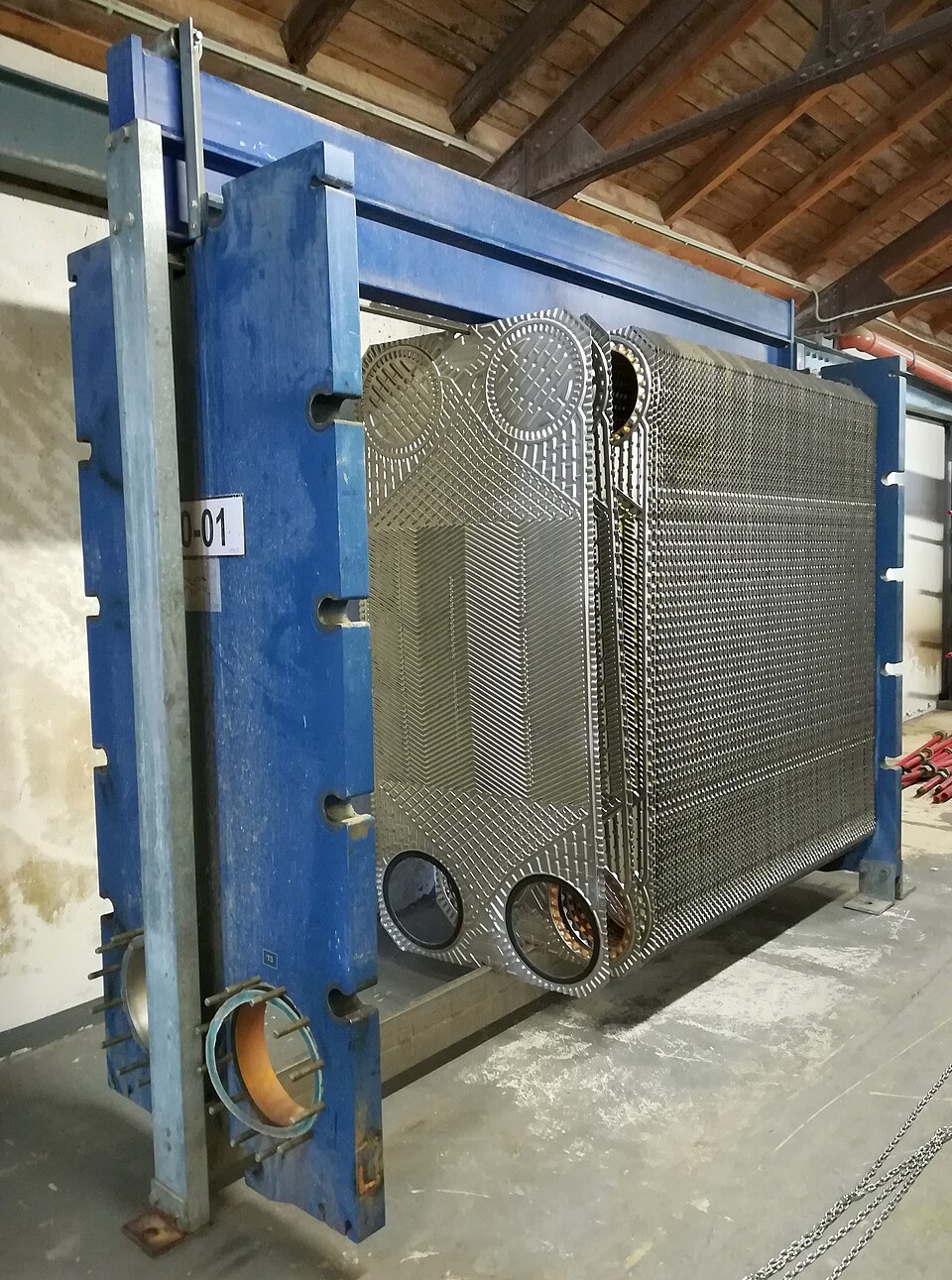
Stable process temperatures are essential for industrial production. Problems with heat-transfer equipment may affect temperature control, energy use, and facility readiness. An industrial plate heat exchanger (PHE) transfers heat between fluid streams through a series of plates.
When leaks or performance changes occur, maintenance and engineering teams must decide whether the PHE needs repair, replacement, or hydrostatic testing. That decision should follow an inspection, operating requirements, and the equipment manufacturer’s instructions.
What Is a Plate Heat Exchanger?
A plate heat exchanger transfers thermal energy through plates separating hot and cold fluid streams. In a gasketed plate-and-frame design, gaskets separate flow paths and maintain sealing. Brazed and welded types have different constructions and maintenance options.
- Fluid inlet and outlet temperatures, process demand, and flow rates.
- Operating pressure and pressure drop.
- Plate cleanliness, deposits, and fouling.
- Gasket compatibility and the condition of plates, frames, and connections.
Signs an Industrial PHE Needs Inspection
1. Fluid leakage
External leaks may result from gaskets, plate damage, assembly, or connections. Internal cross-leakage between circuits requires a different diagnostic approach.
2. Reduced heat-transfer performance
Fouling can restrict heat transfer, but changes in process temperature may also involve pumps, instruments, flow conditions, or different process loads.
3. Changes in pressure drop
An unusual increase in pressure difference may signal flow restriction. It must be compared with relevant design data and operating conditions.
4. Gasket or plate deterioration
Hardened, cracked, or deformed gaskets and corroded or damaged plates need assessment before repair decisions are made.
When Should a PHE Be Repaired?
PHE repair may be appropriate when findings indicate that affected components can be restored or replaced according to equipment design and manufacturer procedures. Activities can involve cleaning plates, regasketing, changing individual damaged plates, checking plate-pack assembly, or addressing connections.
A visible external leak does not automatically justify replacing the whole unit. Equally, repeated repairs without establishing root causes may allow the problem to recur.
When Is PHE Replacement the Better Option?
PHE replacement may be warranted where damage, design limitations, or lifecycle economics make repair unsuitable.
- Significant plate or frame damage.
- Process requirements beyond existing temperature, pressure, or capacity capabilities.
- Incompatible materials or unavailable replacement components.
- Relative repair costs, operational risk, and remaining useful life.
- Installation space, supporting pipework, and utility interfaces.
Replacement can mean selected components or the complete equipment, depending on the engineering assessment.
What Is Hydrostatic Testing for a PHE?
Hydrostatic testing uses a pressurized liquid to assess equipment sealing or integrity according to an approved procedure. For certain gasketed heat exchangers, the manufacturer strongly recommends hydrostatic leakage tests after plates or gaskets are removed or changed before restarting operation.
Hydrotesting is not an alternative to repair or replacement. It may be part of the verification process after maintenance or installing a replacement. A passed leak test does not by itself prove the required thermal performance.
Only competent, authorized personnel should define and execute testing under the applicable manual, nameplate pressure limits, project specifications, and local requirements. Reference: Alfa Laval—Instruction Manual (Pressure Test After Maintenance).
Repair, Replacement, or Hydrotest: Which Is Appropriate?
| Action | Primary consideration |
|---|---|
| Repair | A defect can be addressed through an appropriate maintenance method. |
| Replacement | Condition, design needs, or lifecycle costs support replacing components or the unit. |
| Hydrotest | Leak tightness or integrity needs verification under the relevant procedure. |
These activities can form part of one maintenance sequence: identify symptoms, inspect, select a response, and verify results based on the equipment’s requirements.
SAC’s Industrial Plate Heat Exchanger Experience
PT Sinar Alam Cakrabuana (SAC) has internal industrial project records from 2023–2025 covering PHE repair and leakage-related works, replacement, repositioning and hydrostatic testing, as well as associated work involving flow-meter installation.
These records confirm the types of work undertaken, not specific thermal-performance improvements or test outcomes. Client names and sensitive operating details are not published here. Each assignment requires its own site-based technical assessment.
PHE-related works align with SAC’s MEP services and Machinery & Building Maintenance. For another example of equipment installation coordination, explore our industrial HPL press installation project.
Client Value: Convenience, Responsiveness, and Peace of Mind
Convenience through coordination
PHE work may involve plant operations, maintenance staff, engineering, and component suppliers. SAC supports clearer coordination of mechanical scopes, installation requirements, materials, and project-specific checks.
Responsiveness to equipment issues
Early inspection, clear work scopes, and material preparation support more efficient handling of technical issues. Responsiveness does not constitute an unsupported promise of a particular repair completion time.
Peace of mind through quality and safety
Progress communication, quality checks, worksite safety controls, and inspection documentation provide clients with greater visibility before equipment returns to service.
Why Preventive PHE Maintenance Matters
Planned monitoring can include temperature, pressure, differential pressure, flow rates, leakage, and records of cleaning or component replacements. Intervals depend on process fluid, duty, equipment condition, and manufacturer guidance. Such monitoring supports informed decisions but cannot eliminate all failures.
Additional technical reference: Alfa Laval—Reconditioning and Repair.
Discuss PHE Repair, Replacement, and Testing with SAC
Does your facility need support with PHE inspection, repair, replacement, installation, or testing coordination? PT Sinar Alam Cakrabuana (SAC) provides MEP, CSA, Machinery & Building Maintenance, and Precast Solutions. Headquartered in Cirebon, West Java, SAC supports industrial engineering and construction projects across Indonesia.
Discuss equipment condition, technical requirements, and an appropriate work scope through SAC’s contact page.
PHE illustration: RomanM82 / Wikimedia Commons, CC BY-SA 4.0. Technical illustration, not an SAC project photograph; image unmodified.