
HSE Programs & Safety Culture: Strengthening Industrial Construction Safety
Explore how SAC's HSE programs address industrial site risks through safety communication, inspections, worker participation and responsive coordination.
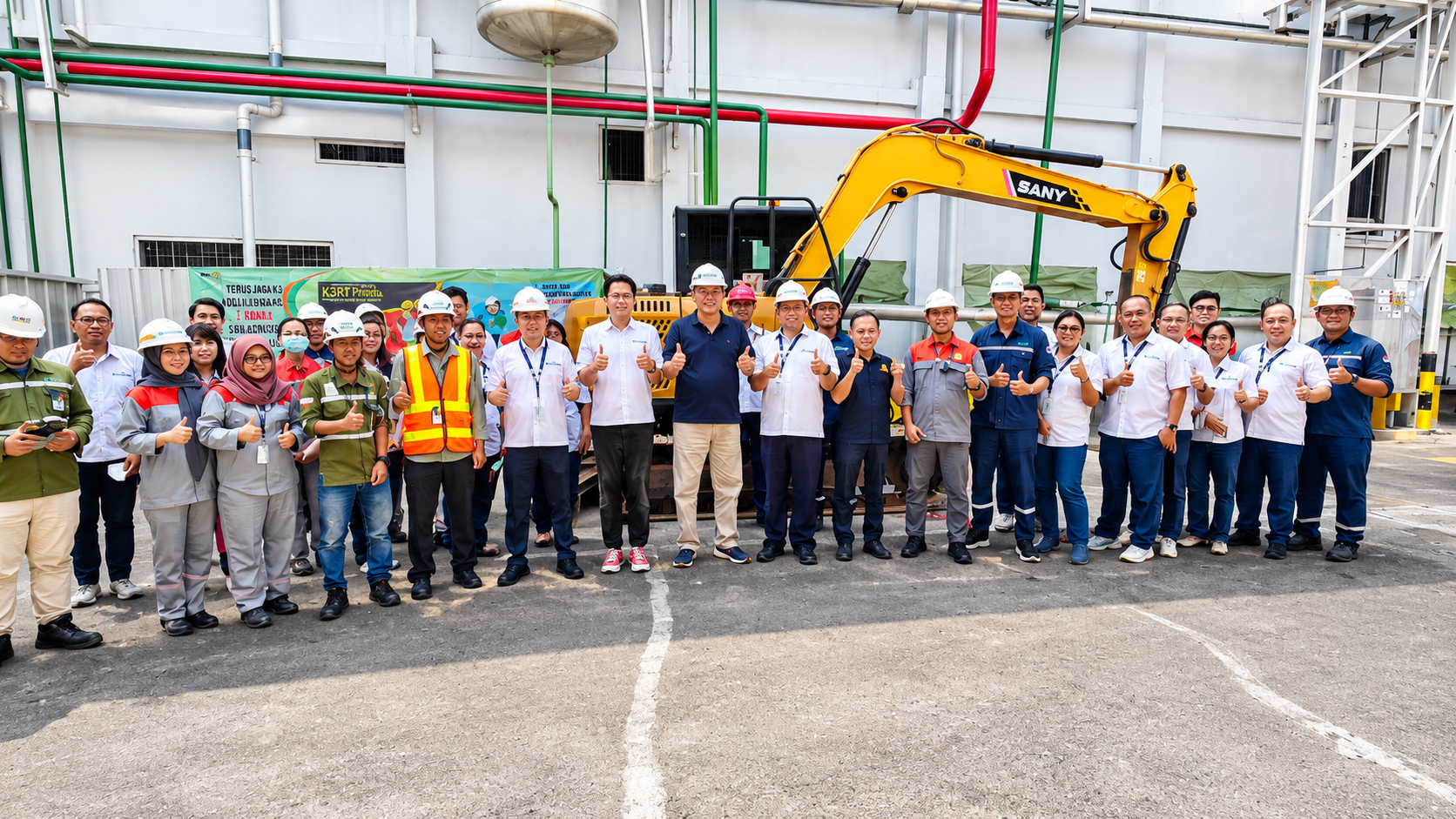
Industrial clients need construction activities to remain coordinated when multiple teams, equipment, and hazards share a work environment. Risks that are not recognized or communicated early may affect workers, activity planning, and facility operations.
Through its HSE Programs & Safety Culture approach, PT Sinar Alam Cakrabuana (SAC) emphasizes hazard communication, workforce readiness, inspections, and follow-up actions across MEP, CSA, Machinery & Building Maintenance, and Precast Solutions. This approach is aligned with ISO 45001:2018 occupational health and safety management principles.
Understanding HSE Programs and Safety Culture
HSE stands for Health, Safety & Environment. HSE programs are structured activities that help identify hazards, communicate risks, check operational readiness, and respond to unsafe conditions.
Safety culture describes shared behavior: workers raise concerns, supervisors address findings, and project stakeholders consider appropriate risk controls in daily decisions. Programs and behaviors need to reinforce each other.
Safety Challenges Faced by Industrial Clients
- Simultaneous operations: different teams may share work areas, access routes, or schedules.
- Changing conditions: equipment moves, materials arrive, routes change, and work methods may need adjustment.
- Communication gaps: workers and supervisors need a common understanding of tasks, boundaries, and procedures.
- Action on findings: identified hazards need clear ownership, appropriate control measures, and review.
Key HSE Programs in Construction
- 1. Safety Induction. Site-specific orientation covering rules, hazards, PPE, access, and emergency arrangements.
- 2. Toolbox Meeting. A short, task-focused discussion before work to review risks and controls. Read SAC’s Toolbox Meetings article.
- 3. Safety Inspection. Checks of site conditions, access, working-at-height protection, and relevant safeguards.
- 4. Equipment Inspection. Checks of tool condition, safety devices, and suitability before use.
- 5. Safety Patrol. Observation of active work and emerging site hazards.
- 6. HSE Training. Competency and awareness development based on tasks and risk exposure.
- 7. Site Housekeeping. Managing materials, waste, access, and general workplace order.
- 8. Weekly Reporting. Summarizing inspections, observations, findings, and follow-up actions.
- 9. First Aid Readiness. Arrangements for equipment, competent personnel, emergency communication, and medical referral according to site needs.
HSE Programs and ISO 45001:2018
ISO 45001:2018 addresses leadership, worker participation, hazard identification, operational control, performance evaluation, and continual improvement. HSE activities may support these requirements when integrated into actual work processes.
For example, toolbox talks can support consultation and communication; inspections help observe conditions; and follow-up actions contribute to performance review and improvement. A program list alone does not demonstrate full compliance or specific safety performance outcomes.
Developing a Shared Safety Culture
Safety culture grows when people treat hazard awareness and responsible action as part of their work. Supervisors need to encourage open communication, workers need opportunities to report concerns, and corrective actions need attention proportional to the risks.
In CSA work, typical issues may relate to excavation, formwork, concrete casting, and heavy equipment. In MEP, controls may concern energy isolation, machinery lifting, electrical work, hot work, or pressurized systems. Appropriate measures depend on the specific tasks and procedures.
Client Value: Convenience, Responsiveness, and Peace of Mind
Convenience. Coordinated HSE communication helps clients understand site access, safe working arrangements, responsibilities, and risk controls affecting their facilities.
Responsiveness. Focused discussions and inspections support earlier identification and handling of hazards, enabling clearer decisions before issues grow. Safety requirements must not be bypassed to meet schedules.
Peace of mind. Clear reporting, site oversight, transparent progress communication, and follow-up actions provide better visibility into risk management. These practices do not guarantee zero incidents; they support accountable execution.
From Programs to Measurable Follow-Up
The value of HSE activities should be assessed through their relevance to actual risks, workforce participation, and closure of identified issues—not merely the number of meetings or checklists. General references include NIOSH Construction Toolbox Talks and ISO 45001.
Discuss Your Industrial Project and Safety Coordination
PT Sinar Alam Cakrabuana (SAC) provides MEP, CSA, Machinery & Building Maintenance, and Precast Solutions with attention to engineering coordination, quality, and worksite safety. Headquartered in Cirebon, West Java, SAC supports industrial facilities throughout Indonesia. Contact SAC to discuss your project requirements, worksite arrangements, and HSE coordination needs.