
Toolbox Meetings: Building a Strong Safety Culture Before Work Begins
Explore how Toolbox Meetings support hazard communication, worker participation, ISO 45001:2018 and safety culture in industrial construction.
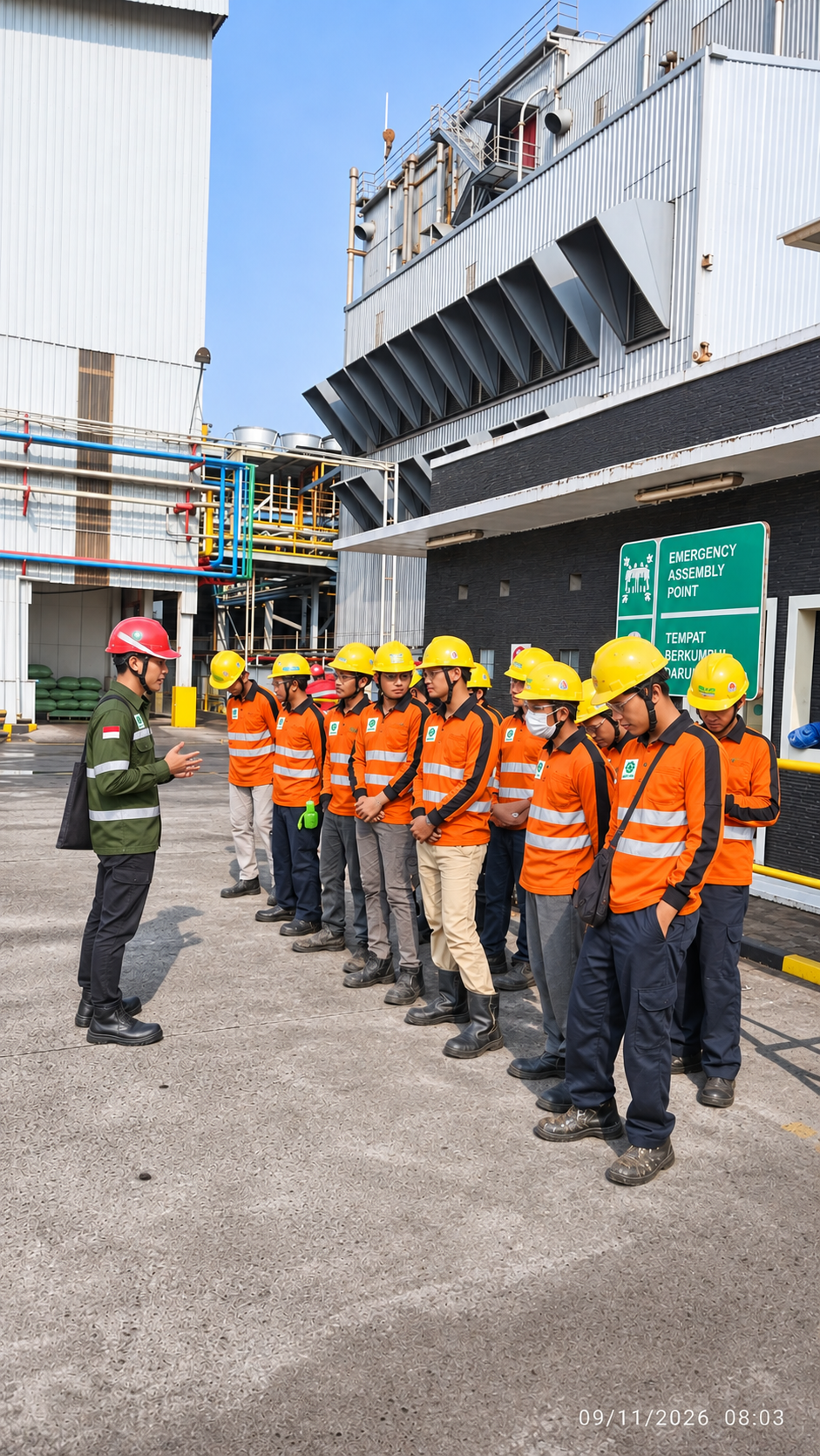
In industrial engineering and construction, workplace safety depends on more than personal protective equipment (PPE) and written procedures. Workers need to understand their activities, potential hazards, and suitable risk controls before work begins. One practical way to support this preparation is a Toolbox Meeting, also known as a toolbox talk.
For PT Sinar Alam Cakrabuana (SAC), the HSE Programs & Safety Culture approach emphasizes work coordination, hazard communication, worker participation, and the application of occupational health and safety management principles in industrial construction.
What Is a Toolbox Meeting?
A Toolbox Meeting is a short, task-focused safety discussion commonly held before work starts or when activities and risks change. It may be led by a supervisor, site manager, or HSE personnel according to the project structure and procedures.
The discussion may cover planned work, site conditions, hazards, control measures, equipment readiness, PPE requirements, and work permits. Its purpose goes beyond one-way instructions: workers should have a meaningful opportunity to raise concerns and clarify safe work arrangements.
Why Toolbox Meetings Matter in Industrial Construction
Civil, Structural & Architectural (CSA) activities can involve excavation, working at height, formwork, reinforcement installation, concrete casting, and heavy equipment. Mechanical, Electrical & Plumbing (MEP) work may involve machinery lifting, electrical hazards, pressurized systems, welding, and multiple activities occurring in shared work areas.
Task-specific discussions help align the work plan with actual site conditions. Relevant topics include:
- Work planning: activity scope, location, methods, responsibilities, and changing conditions.
- Hazard identification: risks arising from equipment, materials, weather, access, and simultaneous operations.
- Risk control: preventive measures based on the project’s hazard identification and risk assessment.
- People and equipment readiness: worker competency, equipment condition, PPE, and applicable work permits.
- Emergency arrangements: communication, evacuation routes, and the relevant response procedures.
How to Conduct an Effective Toolbox Meeting
- 1. Select task-relevant topics. Base the discussion on scheduled work, current conditions, and identified hazards.
- 2. Explain hazards and controls clearly. Use language and examples that workers can readily apply.
- 3. Encourage participation. Give workers opportunities to report unsafe conditions, equipment concerns, and newly identified risks.
- 4. Agree on follow-up actions. Assign responsibilities for identified issues and reassess work where risks remain uncontrolled.
- 5. Keep useful records. Record the date, location, participants, topic, identified concerns, and necessary actions.
Before reinforced concrete slab casting, for example, a discussion may address formwork stability, mixer truck movement, boom pump operating areas, and safe positioning of site personnel.
Toolbox Meetings and ISO 45001:2018
ISO 45001:2018 is an international occupational health and safety management systems standard. Toolbox Meetings may support practical implementation, particularly in the following areas:
- Clause 5.4 — Consultation and participation of workers: conversations offer opportunities to report hazards, raise concerns, and suggest improvements.
- Clause 7.4 — Communication: meetings can convey safety requirements, changing site conditions, and applicable controls.
- Clause 8.1 — Operational planning and control: task-focused discussion can help align site activities with planned safe work methods and controls.
ISO 45001 does not specifically require an activity called a ‘Toolbox Meeting’ or prescribe a single meeting format. Toolbox talks do not replace risk assessment, permits, inspections, training, or necessary worksite controls.
How Toolbox Meetings Can Support ISO 9001:2015
Pre-work coordination can also contribute to construction quality. Under ISO 9001:2015, internal communication and operational controls help teams understand methods, materials, responsibilities, construction drawings, and quality inspection requirements.
For reinforced concrete works, pre-work coordination may cover formwork checks, reinforcement arrangements, level controls, fresh-concrete testing, and safety arrangements. Toolbox Meetings alone, however, do not demonstrate full compliance with ISO 9001.
From Safety Communication to Safety Culture
A sustainable safety culture develops through consistent actions: identifying hazards, reporting concerns, following procedures, and completing corrective measures. Toolbox Meetings can reinforce these behaviors, but their value depends on the quality of the discussion and the actions taken afterward.
Supervisor leadership, safe equipment, worker involvement, and follow-up actions matter more than the number of toolbox talks conducted.
SAC’s Approach to HSE in Construction
SAC integrates quality and workplace safety considerations into industrial engineering and construction, supported by its ISO 9001:2015 and ISO 45001:2018 management systems. Task-relevant safety discussions such as Toolbox Meetings can support hazard communication and construction readiness.
Further reference materials on construction safety talks are available from NIOSH and the UK Health and Safety Executive.
Planned Engineering. Managed Quality and Safety.
Looking for an engineering and construction partner that considers technical coordination, quality, and occupational safety? PT Sinar Alam Cakrabuana (SAC) provides MEP, CSA, Machinery & Building Maintenance, and Precast Solutions. Headquartered in Cirebon, West Java, SAC supports industrial facilities and projects across Indonesia. Contact SAC to discuss your engineering and construction requirements.